


The Polar Satellite Launch Vehicle (PSLV) has been India’s most reliable for three decades now. The fact that it had two consecutive failures has generated a lot of concern around the country and understandably so. For many of us who follow ISRO closely and take pride in its consistent success, the PSLV performing flawlessly is something we’ve almost taken for granted. When anomalies happen, it’s natural to worry or rush to judgments about decline. However, looking at the data and the broader context, I see a different picture.
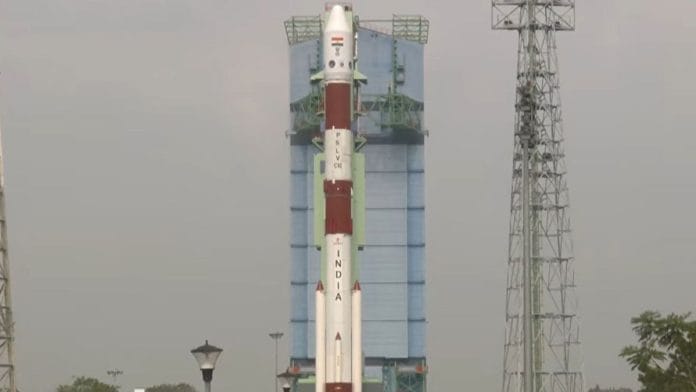
In my latest Op-Ed for The Print, I argue that while these setbacks are serious, they are statistical anomalies for a workhorse with a 95% rate of success over three decades. The real challenge is not a 𝘣𝘳𝘰𝘬𝘦𝘯 rocket. It is the managing of a mature technology system during a critical transition in India’s space policy.
I explore why this moment feels heavier than past failures and outline a constructive path forward: transparency, a clear return-to-flight plan, and keeping the long game in sight.
From the article:
… For decades, it maintained an unbroken streak of successes. It earned a global reputation as one of the most reliable launch vehicles. It carried the weight of India’s most visible scientific missions like the first lunar probe (Chandrayaan-1), the first Mars orbiter (Mangalyaan), and the first solar observatory (Aditya-L1). Few rockets have demonstrated this level of mission flexibility.
The point here is this: The PSLV is a mature piece of technology. It is a platform designed, optimised, and perfected over three decades. But even mature technology is not immune to entropy. Systems can drift when suppliers change, components age, and processes evolve. However, ISRO has proven it knows how to build a reliable launch system, how to run missions repeatedly, and how to recover from setbacks. It is reasonable to believe ISRO can fix PSLV again…
… it must prioritise three decisive actions.
… it should commit to a clear cadence of communication: What is known, what is still being tested, what hypotheses have been ruled out, and when the next update will come. Silence creates a vacuum that gets filled with speculation. It is bad for commercial confidence.
… The industry needs to see a checklist. By when will the failure investigation be closed? By when will corrective actions be completed? What additional verification tests will be done on the ground before flight? What are the “go/no-go” criteria for declaring PSLV ready again? This restarts the rest of the ecosystem and commercial plannin
… keep the long game in sight. As ISRO moves toward higher-risk missions, failures become more likely because the frontier is harder. That is exactly why a culture of openness and process discipline must begin now.
Click here to read the full analysis here: theprint.in/opinion/isro-was-set-to-move-on-to-a-new-era-pslv-failure-has-stalled-indias-space-policy/2830706/
(𝘕𝘰𝘵𝘦: T𝘩𝘦 𝘩𝘦𝘢𝘥𝘭𝘪𝘯𝘦 𝘢𝘯𝘥 𝘴𝘵𝘳𝘢𝘱 𝘸𝘦𝘳𝘦 𝘤𝘩𝘰𝘴𝘦𝘯 𝘣𝘺 𝘵𝘩𝘦 𝘱𝘶𝘣𝘭𝘪𝘤𝘢𝘵𝘪𝘰𝘯.)