


Oppenheimer made an impact, and continues to, still. The movie was poignant in its portrayal of a familiar time in history and yet makes one think about it with new questions and ideas that linger in your thoughts long after the credits roll in.
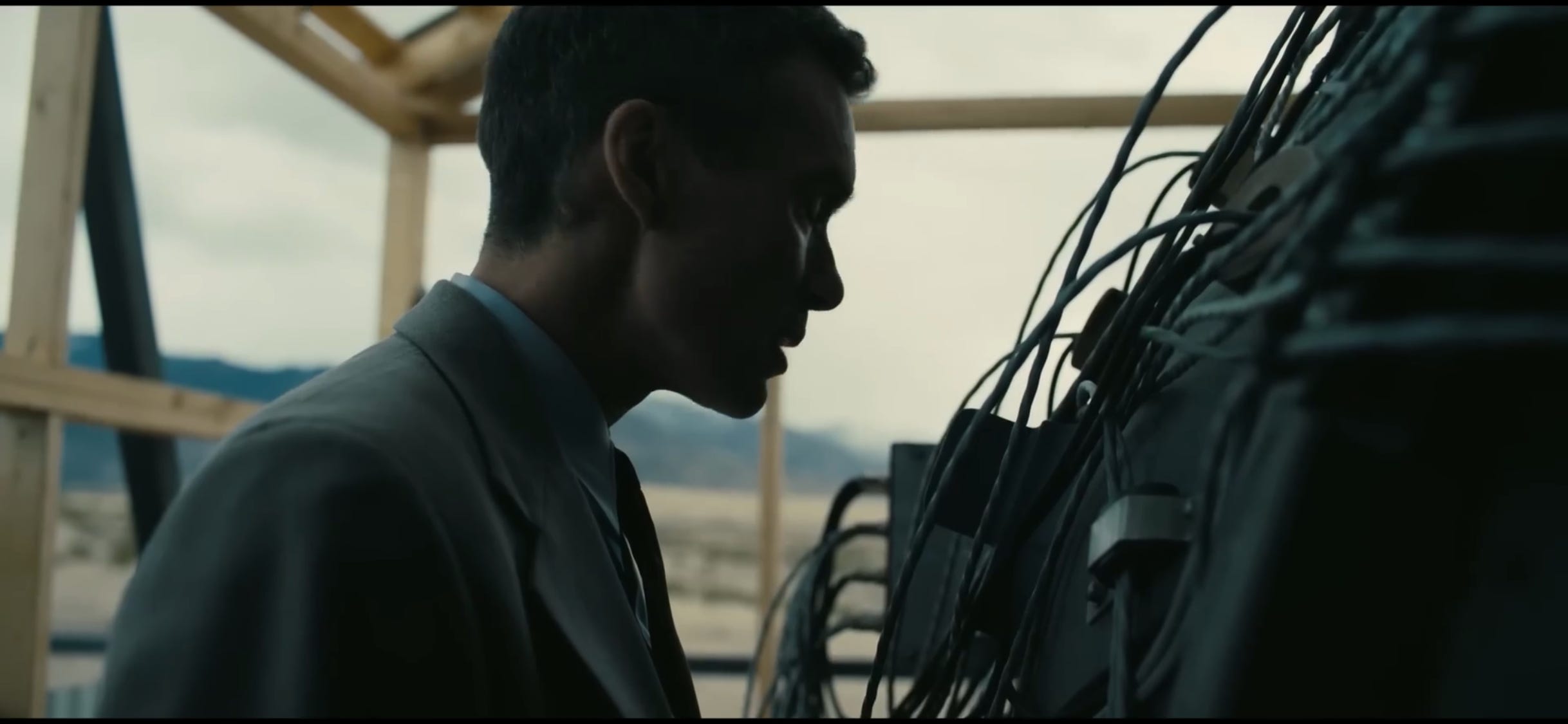
Centred around J. Robert Oppenheimer, the movie tells its tale mainly through three phases of his life - a young student, finding his place in his world; an ambitious physicist tasked with creating an atom bomb; and finally an older man reeling silently to cope with the consequences of his successes. The subtle, yet discernible differences in the psyche of the man in each stage makes for some powerful storytelling.

Watching a young Oppenheimer in Europe grappling with his thoughts, with Ludwig Goransson playing in the background just hits differently. It was a phase of his life that I could relate with the most.
We see Oppenheimer’s thoughts keeping him up at night, his troubled by visions of a hidden universe. This might be attributed to Oppenheimer’s character in particular - the pondering type. But I like to think it is Nolan pointing to the burdens of a physicist’s mind. Comprehension of the complexities of quantum physics and molecular physics can lay bare some fundamentals about the world we live in that can be hard to come to terms with. It is the same reason we all experience a short identity crisis after a visit to the planetarium. I can only imagine how Oppenheimer must have felt, fully and forever drowned in this world, on a much larger scale. Though his homesickness definitely adds to it all, the glimpse of passion at the prospect of attending Bohr’s lecture shows that he was exactly where he wanted to be.
The sweeping shots of Harvard and Göttingen are awe-inspiring. Historic centres of learning always are. Looking at them as communities that nurtured and shaped some great scientific minds of our time brings an added layer of veneration.
After his return to America, I could see his poise that came with being on home turf - driven, boastful and self-assured. Before the war, his inquisitive attitude also comes through with his inquiries into various contemporary issues. A curiously uninformed person until the 1930s, bring a New Yorker, Oppenheimer did not know about the 1929 Wall Street crash until 6 months after the fact. This changed after his European days. For instance, he displayed strong opinions about the Spanish civil war. He was well read and delved into various subjects.
He never restricted himself to one discipline at the cost of another. During his lectures, he was known to often jump from one topic to another. He would also abandon physics months on end while he studied something else that interested him, like philosophy.
Raised in a non-observant Jewish family of New York, the Bhagavad Gita was a spiritual crutch to him. He would unfailingly turn to the Gita and quote from it on many occasions. His interest in the leftist ideology and the resulting associations at the time go on to become a major talking point during his security hearing later on.
The transition to wartime and the beginning of arms race changes the mood of the movie, bringing in a specific direction and purpose to Oppenheimer’s scientific vision, culminating in Los Alamos.
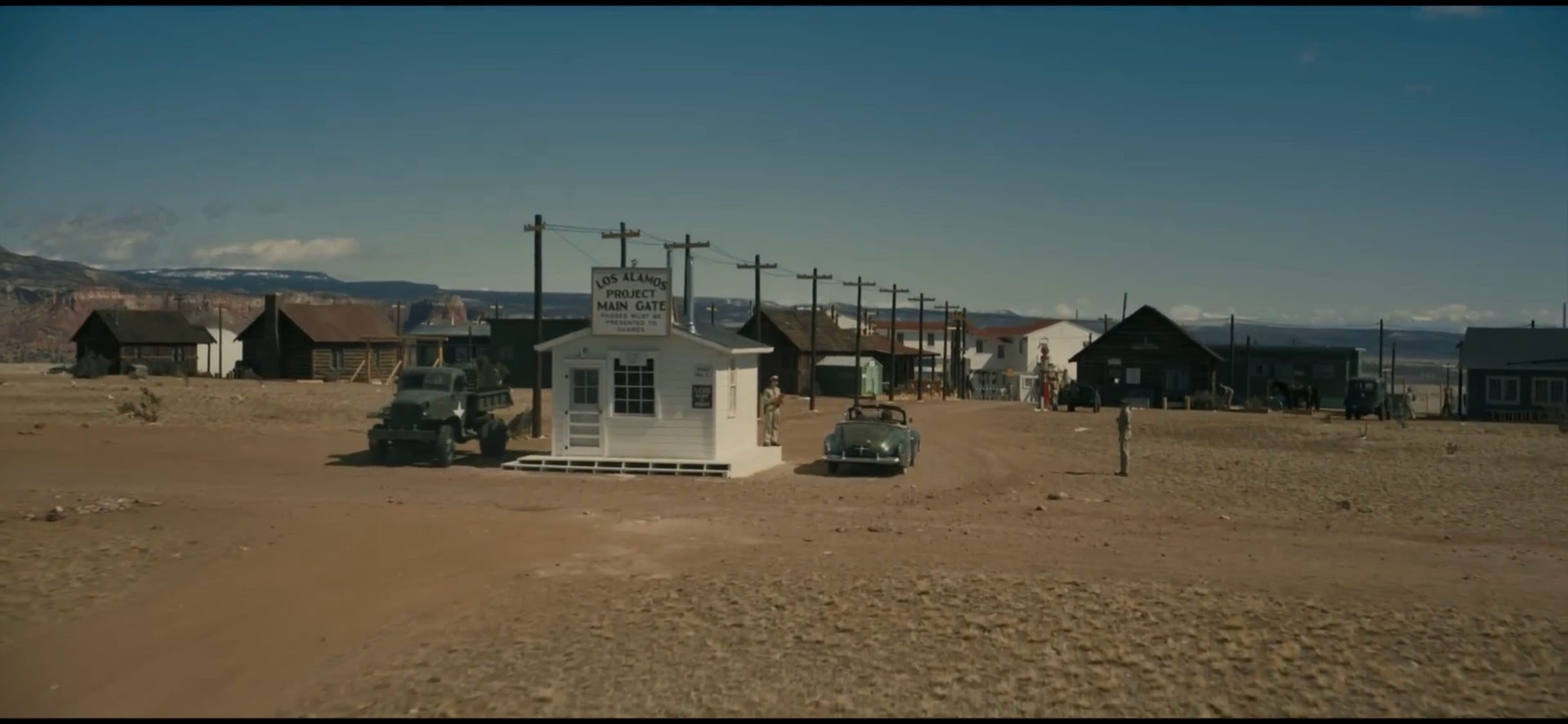
The organisation of the town and its personnel showcased the capabilities and willpower of American wartime bureaucracy. Matt Damon was enjoyable to watch as the intrepid soldier-in-charge attempting to balance secrecy and efficiency. He displayed clear weariness at the lack of discretion on the part of the scientists. Yet, he extended a long leash to allow them to operate as per their preferences. The subtle portrayal of this high trust society within a low trust wartime government was great.
Oppenheimer was shown as the lead scientist-manager who brings all the players together. This cues in my first criticism of the movie. I failed to notice the inspiration or genius from Oppenheimer in this stage. For all the praise as the father of the atom bomb, his role in the movie felt unsubstantiated. I am sure it wasn’t in reality. He directed the Manhattan Project with a combination of his intellect, leadership and charisma. He was known to be able to instinctively grasp the core of the issues that surfaced, manage egos and create synergies in the teams. I wish we got to see more of this.
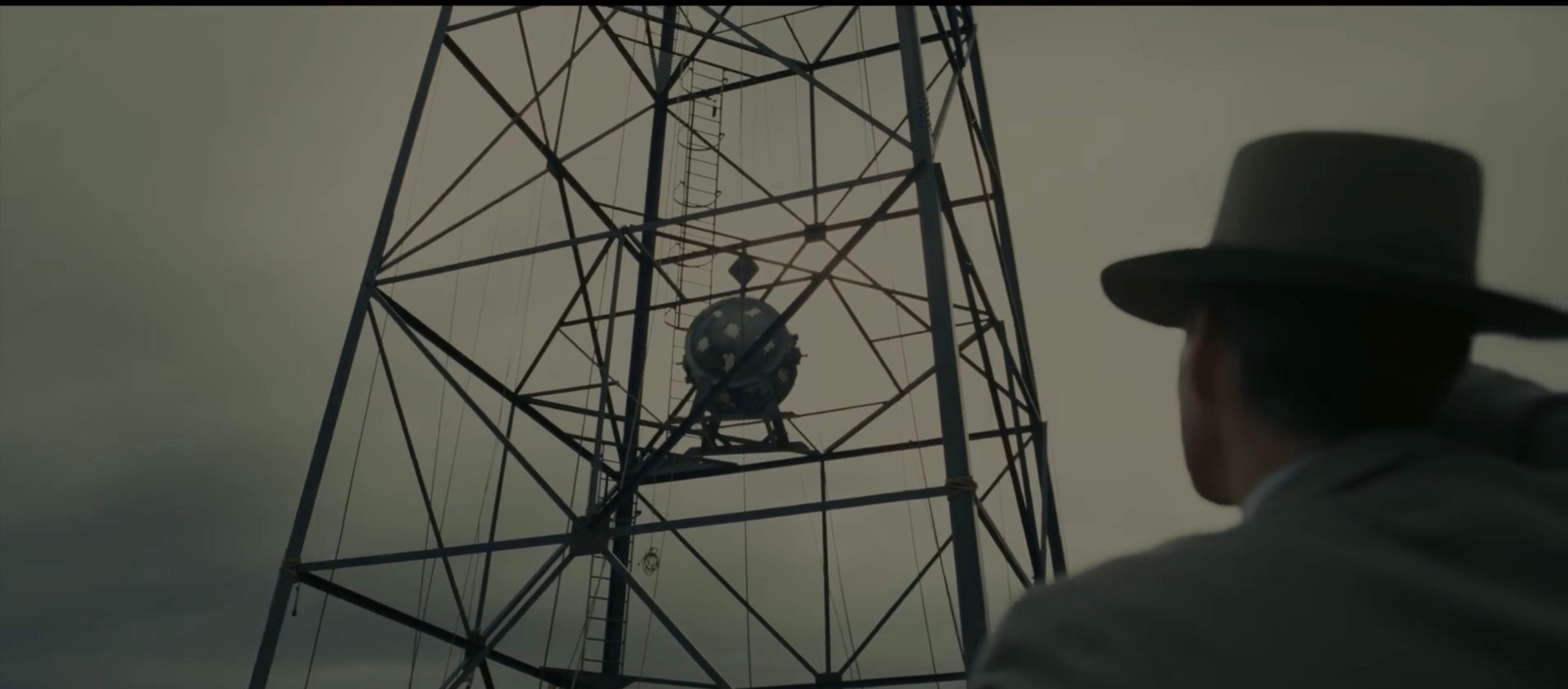
The lead up to Trinity and its eventual execution was a high point in the movie. The deafening silence during the explosion ensued by the delayed sound was reminiscent of witnessing a fiery lightning before thunder arrives. It redefined the terror of a nuclear explosion that I had not wholly acknowledged.

Becoming the dividing line of his life, Trinity test marks Oppenheimer’s shift in perspective about nuclear weapons. We see cracks in his beliefs. Until that point, he was aware of the concerns his colleagues voiced about the atomic bombs. However, he believed in seeing it through and also believed it wasn’t his place to deliberate upon their future use. After the tests, an unease crept into his mind.
From Trinity to the Japanese atomic bombings, he goes from denial to unease to abject horror. I cannot imagine a human soul ever coming to terms with the fact that they created the bomb responsible for taking the lives of at least a hundred thousand people. And I don’t think Oppenheimer ever did.
This abstract movie had many elements including one of a biopic and a political thriller. However, this particular bit was purely horror. The crowds cheering during Oppenheimer’s address overlapped with the sound of a lone scream gave me a psychological jump scare. I can’t believe how convincing Cillian was in these parts.

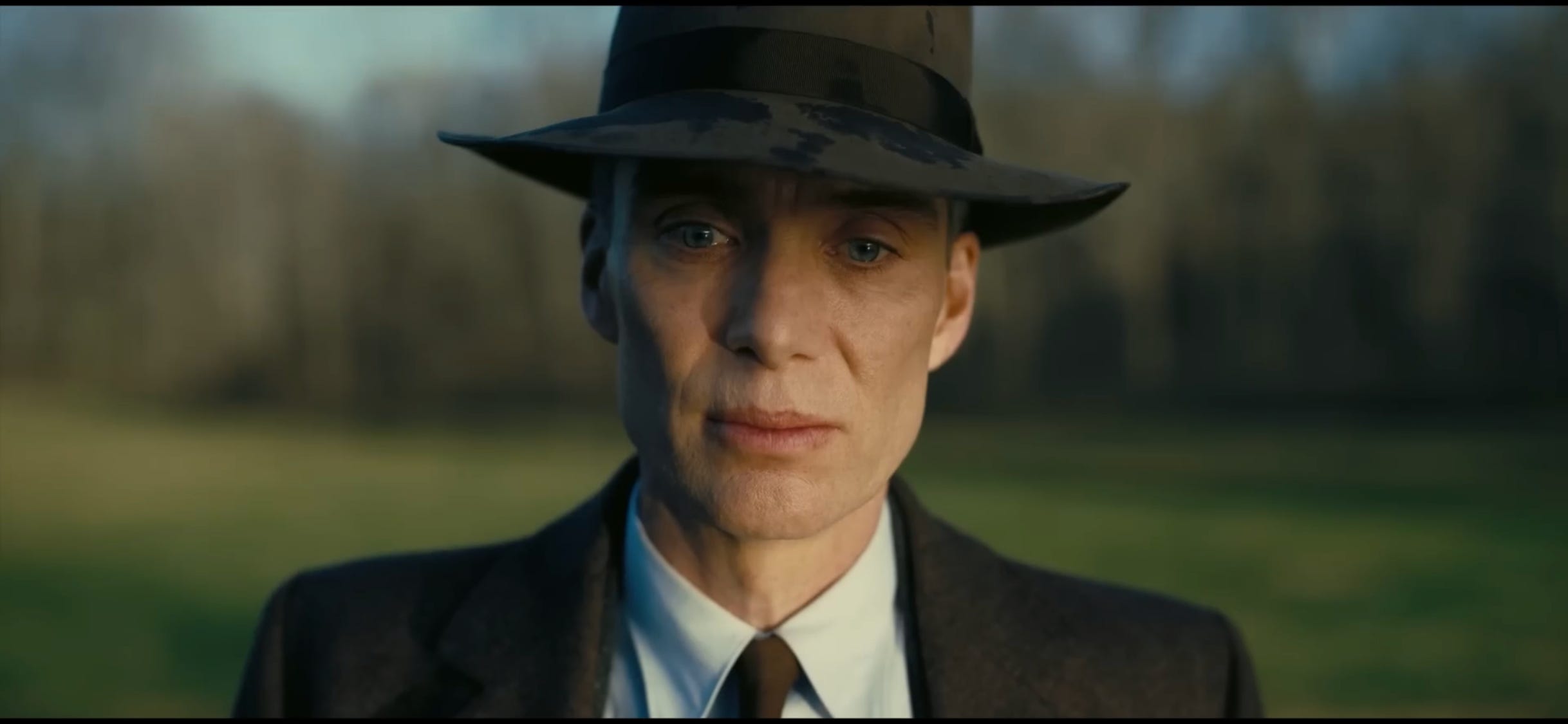
The gravity of many moments are communicated simply by a close up shot of Oppenheimer’s face: the loading of Fat Man and Little Boy into trucks headed for the Western Pacific for instance. Cillian manages to get so much across. His performance was superb.
Oppenheimer’s self-appointed role as an intellectual liberal, advocating international cooperation for nuclear arms control was his way of taking responsibility for giving fission bombs to the world. I marvelled at the conviction it takes for a person in his position to use his voice in that manner at that period in US history. I cannot imagine the political enemies he made along the way. In hindsight, it is one of the most courageous examples of freedom of expression and dissent.
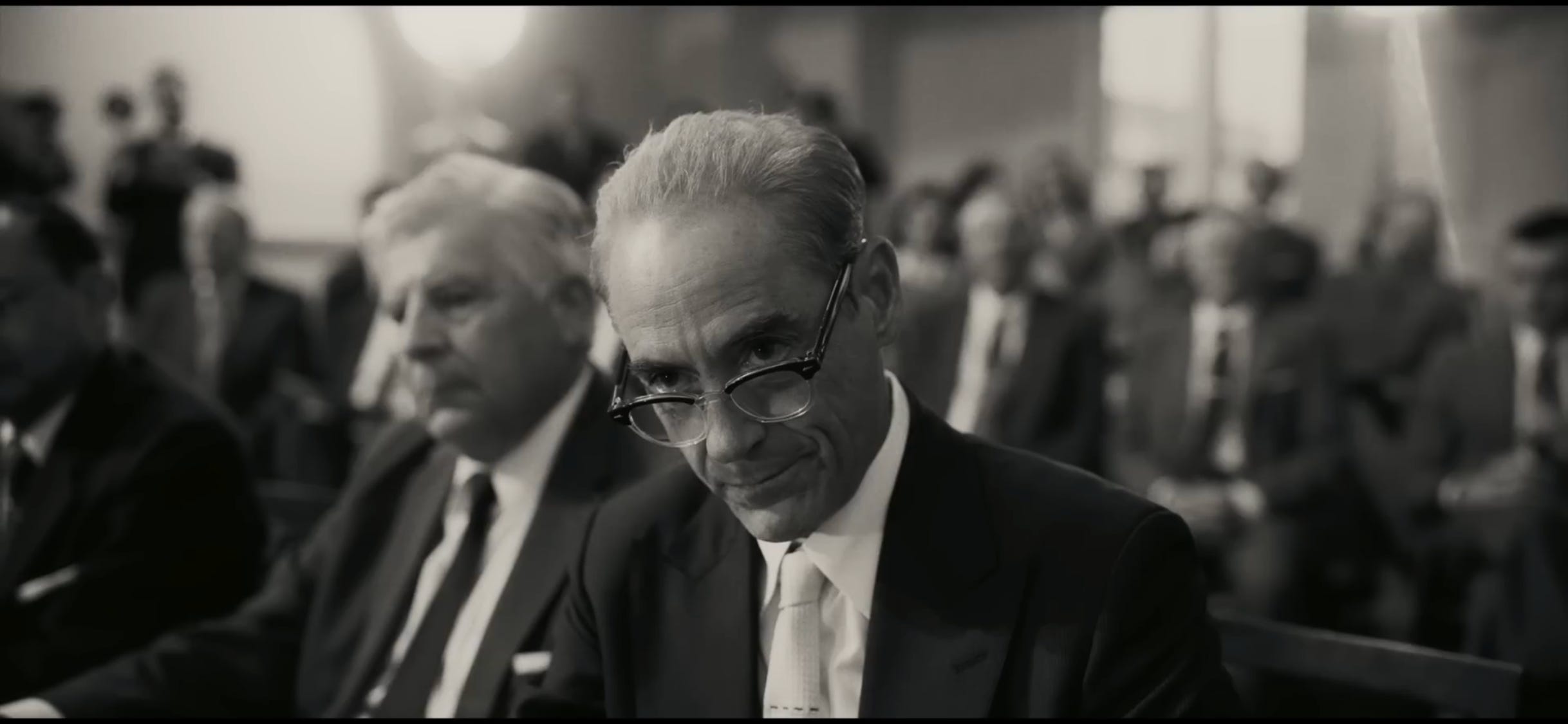
The motivated actions of the State and Levi Strauss to delegitimise Oppenheimer through a rigged legal process, shown since the start of the movie, then begins to make clearer sense. Robert Downey Jr. gave a phenomenal performance. Coupled with the tight script and dialogues, I have spent a long time trying to catch all the elusive shades of his character sprinkled throughout his screen time before the reveal of his true motives. His insistence that he’s an Admiral despite being a reserve and his repeated references to how Oppenheimer soured Einstein on him comes to mind.

Despite being a star studded cast, every performance was restrained and impactful. I absolutely loved Emily Blunt as Kitty Oppenheimer. She brought out the enormous agency and conviction that Kitty possessed, which was a big factor in Oppenheimer’s achievements and survival. Many things come to light through the prism of her incisive insight into many things including Oppenheimer himself and his reasons for silently accepting the attacks on his credibility.
Borden recollects flying on a plane during the world war when he saw a German missile whiz by, headed for Britain. The helplessness and horror of that moment. Oppenheimer often imagined himself in that plane watching numerous nuclear ICBMs as they pass above him, enough to destroy the world. Such a powerful image.
The fear surrounding the possibly self-sustaining chain reaction from an atomic explosion that could ignite the entire atmosphere, when first presented, was terrifying to comprehend. Putting it to rest in the literal sense and then, resurrecting the idea figuratively hammered the point home. What have we done.